
My research focuses on computer vision and large multimodal models; I have played a key role in leading major research initiatives and producing high-quality academic outputs. I possess strong engineering implementation skills and experience in backend development (including database management), enabling me to handle the full R&D lifecycle—from preliminary algorithm research and model compression to full-stack system development and deployment.
I demonstrate exceptional resilience under pressure and a goal-oriented mindset, having led teams to victory in competitions and secured municipal-level honors on multiple occasions. During my studies, I served as a graduate class monitor, honing excellent skills in cross-functional collaboration and interpersonal communication; I was also recognized as an "Annual Honoree" by the department's Party branch, combining a solid technical foundation with a strategic perspective on team coordination.
I am currently seeking an internship in AI development or algorithm engineering to further enhance my skills and experience. If you are interested in my profile, please feel free to contact me. Thank you!
研究方向为计算机视觉与多模态大模型,以核心骨干身份主导多项科研攻坚并产出高水平学术成果。具备扎实的工程落地能力及数据库等后端开发经验,能够胜任从算法预研、模型压缩到全栈系统开发与部署的全链路研发工作。
具备极致的抗压能力与目标导向思维,多次以项目负责人身份带队参赛并斩获市级荣誉。在校期间长期担任研究生班长,具有出色的多方协同与人际沟通能力,曾获院党支部“年度表彰人物”称号,兼具扎实的技术基础与优秀的团队统筹视野。
我正在寻找AI开发/算法实习岗,以提升我的技能和经验。如果您对我感兴趣,欢迎与我联系。谢谢!
Warning
Problem: The current name of your GitHub Pages repository ("Solution: Please consider renaming the repository to "
http://".
However, if the current repository name is intended, you can ignore this message by removing "{% include widgets/debug_repo_name.html %}" in index.html.
Action required
Problem: The current root path of this site is "baseurl ("_config.yml.
Solution: Please set the
baseurl in _config.yml to "Education
-
 Beijing City University北京城市学院School of Information Technology
Computer Science M.S. Student 信息学部
计算机技术 硕士Sep. 2025 - present2025年9月 至今 -
 Shandong University of Technology山东理工大学B.S. in Software Engineering软件工程专业 学士Sep. 2020 - Jun. 20242020年9月 - 2024年6月
Honors & Awards
-
National Scholarship for Graduate Students研究生一等奖学金2026
Selected Projects 精选项目 (view all )
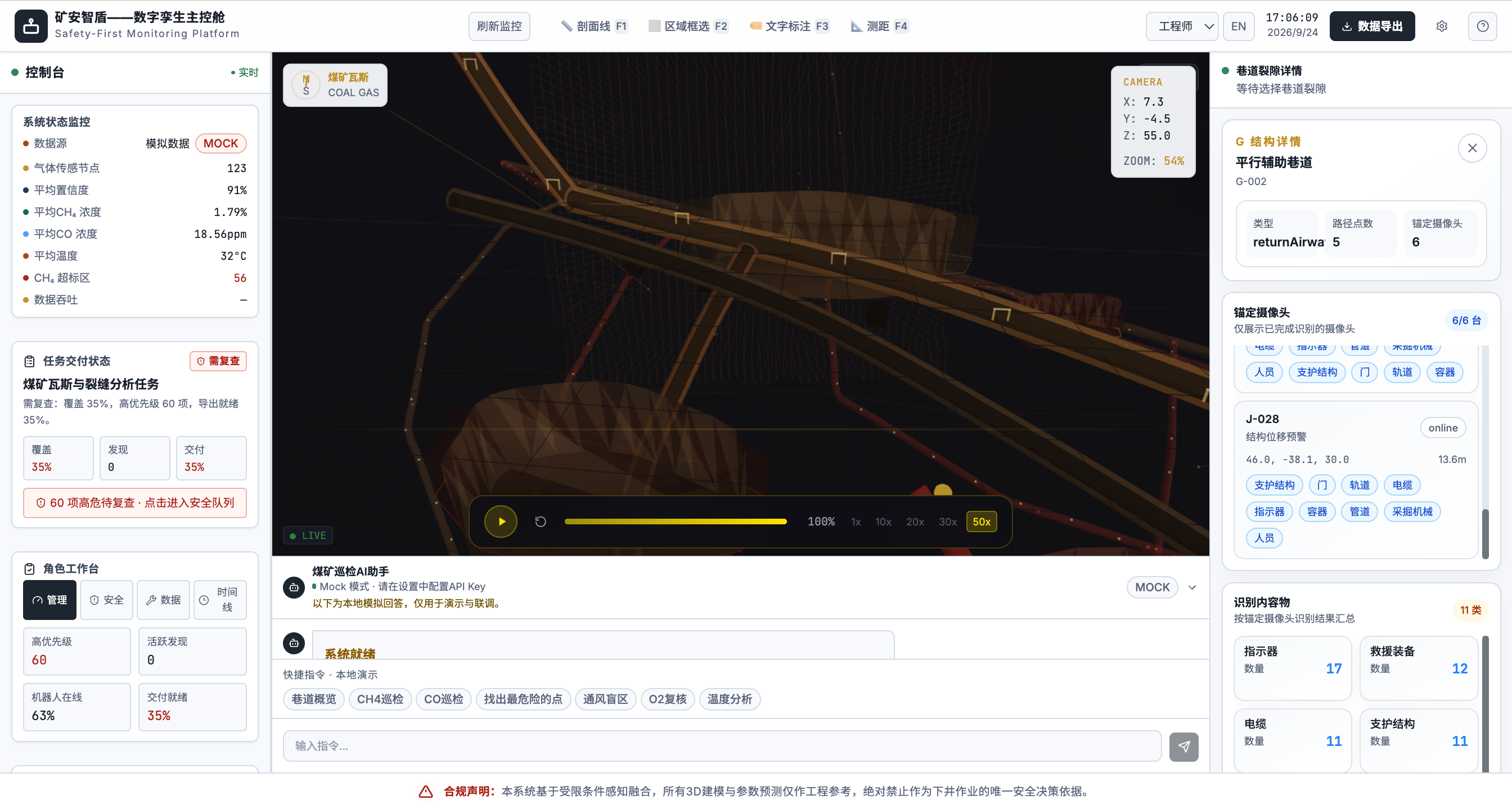
UMIS: Digital Twin Cockpit for Coal Mine Gas Monitoring & Multi-Robot Exploration UMIS:煤矿瓦斯监测与多机器人协同探测数字孪生主控舱
Kaiyu Li
Open-source Project开源项目 2026 Done完成
A digital twin visualization platform for underground coal mine gas monitoring and multi-robot collaborative exploration. It renders billion-scale point clouds (Potree), overlays real-time gas concentration heatmaps (Three.js custom shaders), tracks the robot fleet with live sensor streams and alerting, and provides AI-assisted target identification and decision support. Built with React 18 + TypeScript + Vite on the frontend and FastAPI + Open3D on the backend. 面向煤矿地下裂缝瓦斯监测与多机器人协同探测的数字孪生可视化平台。支持十亿级点云实时渲染(Potree 八叉树 LOD)、瓦斯浓度实时热力图叠加(Three.js 自定义 shader)、机器人集群实时监控与分级告警,并提供 AI 辅助目标识别与决策支持。前端采用 React 18 + TypeScript + Vite(Three.js / R3F),后端采用 FastAPI + Open3D。
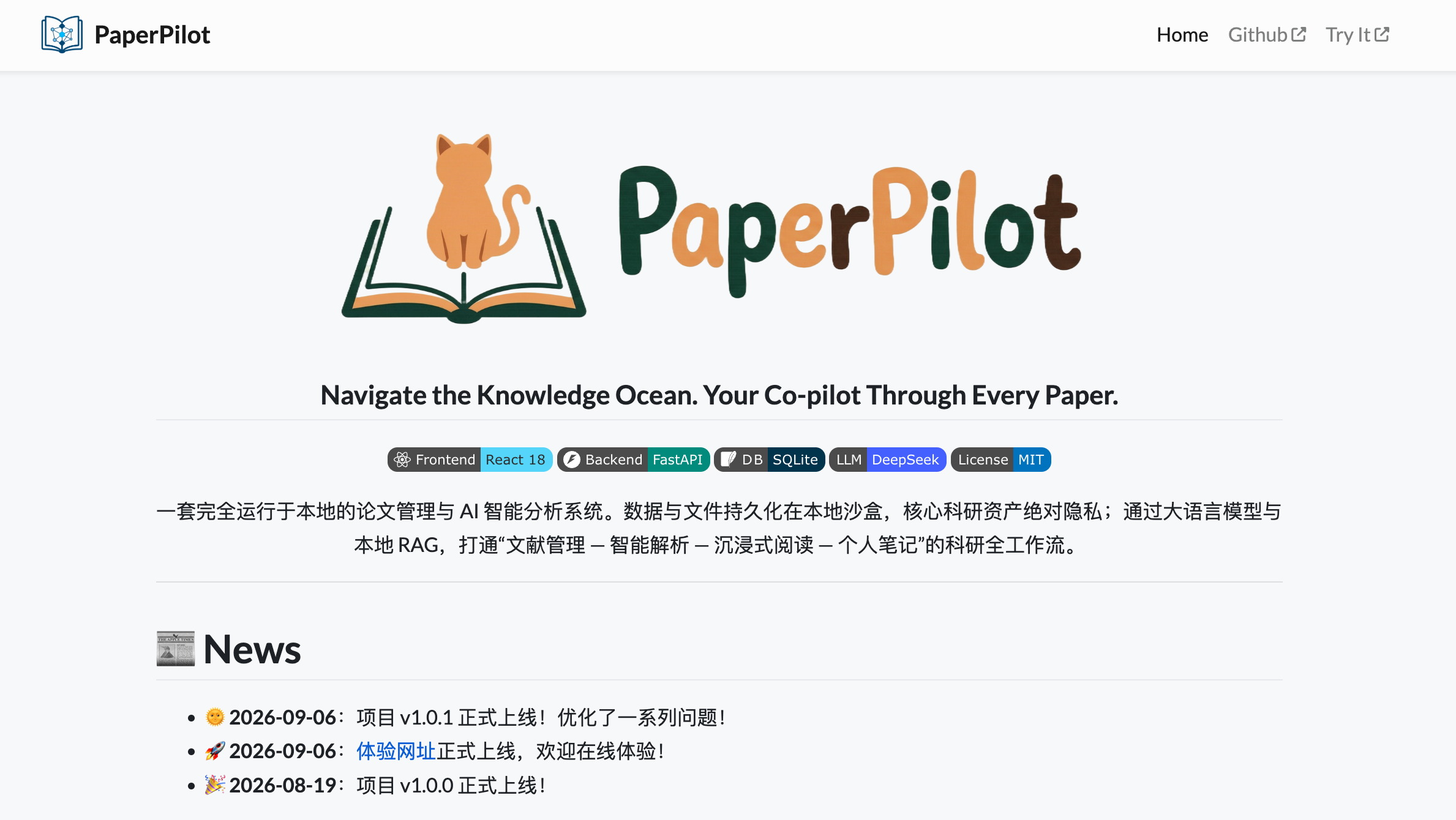
PaperPilot: Local-First AI Paper Management & Analysis System PaperPilot:本地优先的论文管理与 AI 智能分析系统
Kaiyu Li
Open-source Project开源项目 2026 Ongoing进行中
A fully local paper management and AI analysis system. Paper data and files persist in a local sandbox for absolute privacy; powered by LLMs and local RAG, it streamlines the whole research workflow of literature management, intelligent PDF parsing (MinerU + metadata extraction), eight-dimension deep analysis, immersive reading with an AI Q&A sidebar, and personal notes. 一套完全运行于本地的论文管理与 AI 智能分析系统。文献数据与文件持久化在本地沙盒,核心科研资产绝对隐私;通过大语言模型与本地 RAG,打通「文献管理 — 智能解析(MinerU 解析 + 元数据提取 + 八维度深度解析)— 沉浸式阅读(AI 全文问答与框选提问)— 个人笔记」的科研全工作流。
All projects
Selected Publications 精选论文 (view all )
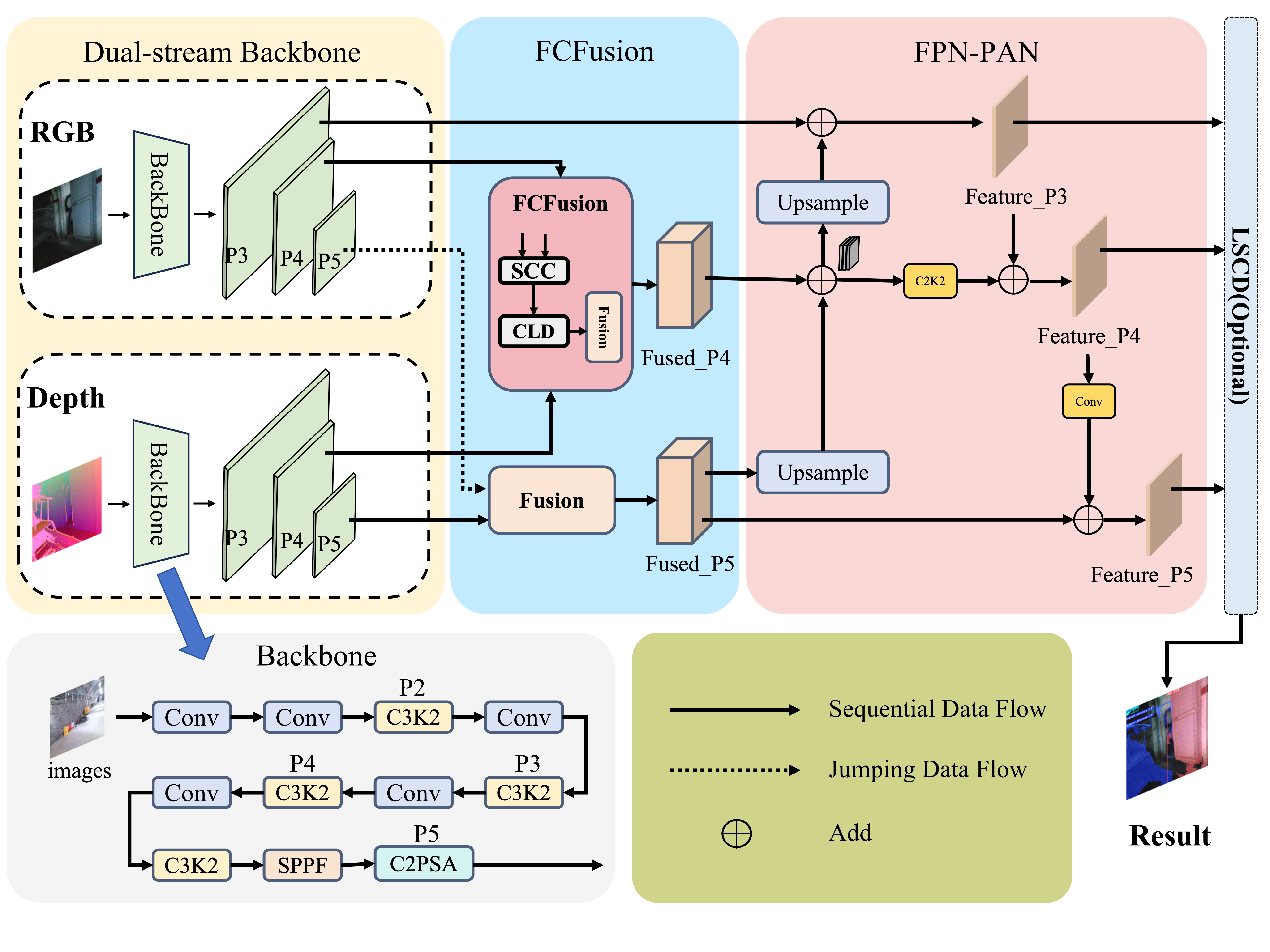
UMIS-Mine: Robust RGB-D Instance Segmentation in Visually Degraded Underground Mine Scenes
Kaiyu Li, Feiteng Han, Yu Wang, Ming Xue, Xiao Zheng
International Conference on Intelligent Computing (ICIC), Springer, CCF-C 2026, pp. 3-14
Instance segmentation in underground mines remains challenging due to severe visual degradation, including low illumination, dust interference, cluttered backgrounds, and frequent occlusions, which limit the development of embodied robotic perception. Although RGB-D sensing provides complementary appearance and geometric cues, effective multimodal fusion is hindered by cross-modal misalignment and modality-specific noise. To address these issues, we propose UMIS-Mine, a robust RGB-D instance segmentation framework for visually degraded underground mine scenes. The proposed framework adopts a dual-stream architecture and introduces a Feature Correction and Fusion module (FCFusion), which performs spatial cross-compensation and channel-level denoising to improve feature alignment and fusion robustness. In addition, we construct MUSeg-Ins, a new RGB-D instance segmentation dataset containing 3,171 aligned image pairs and 34,244 instance annotations across 11 categories. Evaluations on MUSeg-Ins and NYU Depth V2 demonstrate UMIS-Mine's superior accuracy and generalizability, achieving 51.5% and 49.3% mask mAP50 respectively, outperforming representative CNN and Transformer baselines. We further explore an optional Lightweight Shared Convolutional Decoder (LSCD) for resource-constrained deployment, which offers a compact alternative while revealing the trade-off between efficiency and segmentation accuracy.
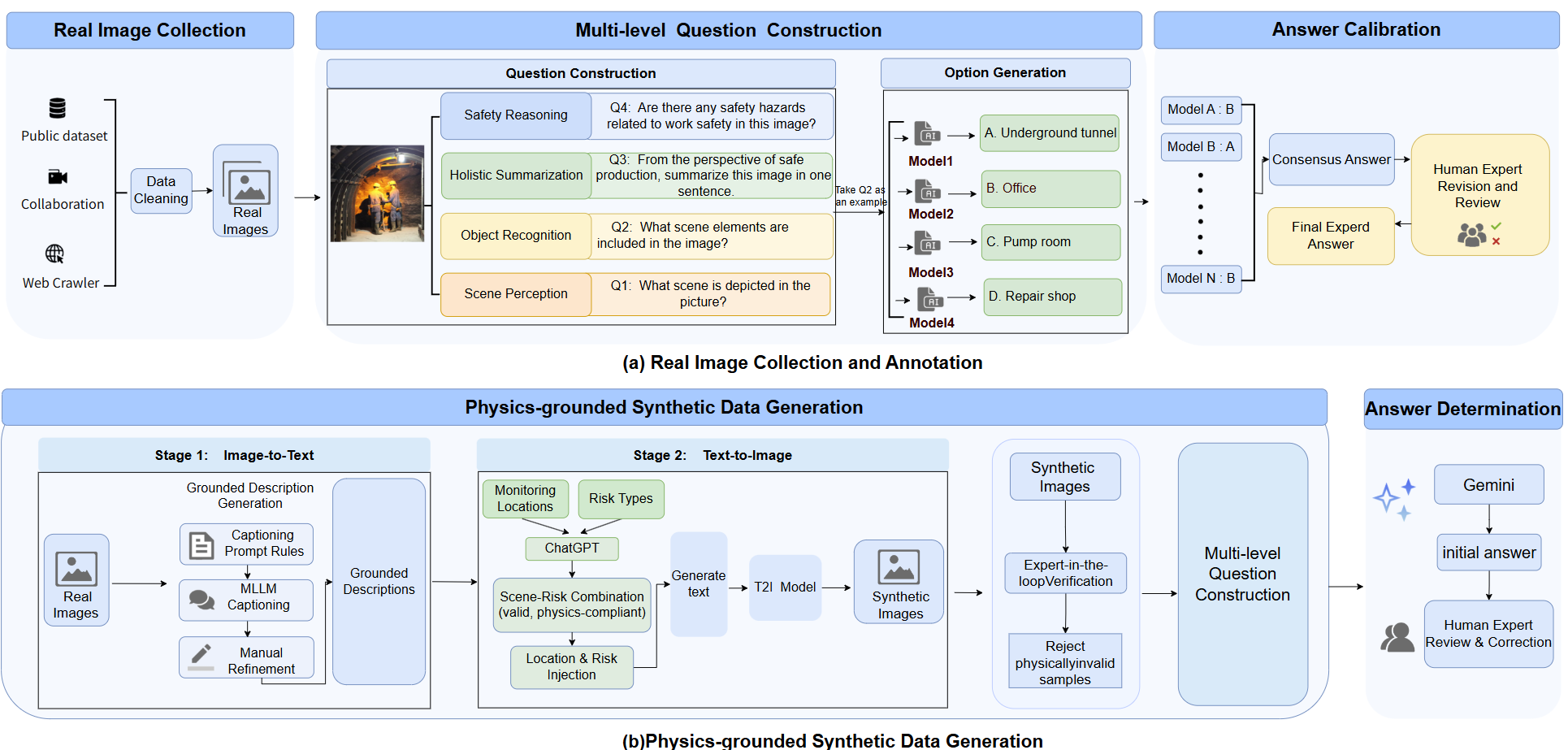
UMSBench-v1: A Real-Synthetic Composited Multimodal Benchmark Dataset for Underground Mine Safety
Feiteng Han, Ming Xue, Kaiyu Li, Tao Feng, Wei Shen, Hui Wang, Yudong Fang, Yu Wang, Xuecheng Tan
ACM Multimedia (ACM MM) 2026, CCF-A 2026 已录用录用
To fill the gap on benchmark datasets for vision language models (VLM) research on underground mining safety analysis, we introduce UMSBench-v1.0. As the first multimodal VQA benchmark dataset and also the first real-synthetic image dataset on mining safety, it consists of 10,000 real-synthetic underground images and 40,000 question-answer pairs correspondingly, and covers safety reasoning, captioning, understanding and perception over 30 underground mining site types. The synthetic data are generated with newly proposed Image-to-Text-to-Image (I2T2I) mechanism based on refined LLM-driven captioning capabilities, prompting engineering and visual content generation models. Moreover, benchmarking tasks are reformulized as Single-Choice Questions (SCQs) with advanced VLMs and human experts as references to archive higher flexibility, scalability and efficiency. State-of-the-art vision language models are bench-marked and finetuned to demonstrate the dataset's effectiveness and potential application. The dataset will be released at https://github.com/BCU-AILAB/UMSBench.